

Network-Building Support Project


Annual Plan 2026
The Southeast Asian Foundation for the Promotion of Culture and Environment
The Southeast Asian Foundation for the Promotion of Culture and Environment has been registered and operating since 2010. Its work focuses on training and developing the capacity of individuals in cultural and environmental conservation in the Mekong River Basin. Environmental problems and climate change have widely impacted the lives of people and indigenous communities. Therefore, the Foundation has established a program of exchange and learning projects to promote the use of human rights and community rights principles in managing and developing projects that affect natural resources and the environment fairly and sustainably. This includes addressing climate justice and climate change. Working through collaboration with environmental networks at the national and Southeast Asian levels, the Foundation provides support in terms of information sharing and capacity building to strengthen the protection of rights and the conservation of natural resources, preserving the valuable ecosystem of the Mekong River Basin – the lifeblood of the people living and depending on the lower Mekong River in countries such as Thailand, Myanmar, Laos, Cambodia, and Vietnam.
The rapid growth of the fossil fuel industry in Southeast Asia directly contributes to global climate change due to the massive release of carbon and greenhouse gases. Currently, climate change policies are not fair and sustainable. If the world continues to rely heavily on fossil fuels, the consequences will worsen. However, those most affected by global warming are indigenous communities, who may face impacts from development projects but may not receive fair treatment or targeted solutions, including a lack of community participation. Promoting community participation and rights is crucial to the foundation’s past projects.
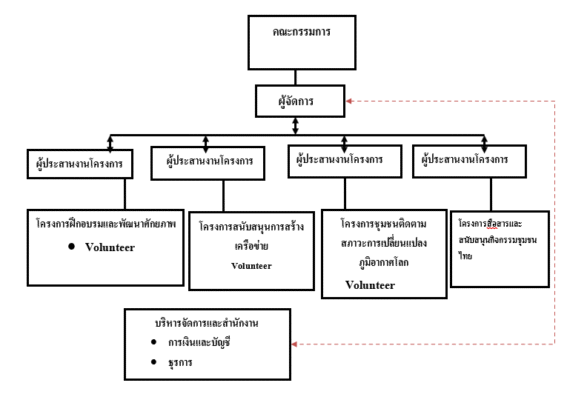
The Southeast Asia Foundation for the Promotion of Culture and Environment regularly implements four projects annually:
1. Capacity Building and Training Program
2. Networking Support Program
3. Community Climate Change Monitoring Program (Just Energy Transition)
4. Communication and Community Activity Support Program for Thai Communities
The Capacity Building and Training Program is the foundation’s core project. Training lasts approximately seven months, from May to November, for interested individuals from five Mekong River Basin countries: Thailand, Laos, Cambodia, Vietnam, and Myanmar. Two volunteers from each country and six from Myanmar participate in the program to exchange knowledge and build networks.
The work focuses on social, cultural, and environmental issues to promote effective prevention and solutions. Each year, the program recruits grassroots individuals and those genuinely interested in these issues. The training takes place at the foundation’s office at 179 Moo 1, San Phi Suea Subdistrict, Mueang Chiang Mai District, Chiang Mai Province. This project has been in operation since 2005.
It supports the creation of networks and collaborative efforts in cultural and environmental conservation with partner organizations in Southeast Asia and the Mekong River Basin countries. These organizations address environmental challenges arising from ongoing or existing development projects. The foundation acts as a central coordinating body to promote fairness and cooperation in environmental conservation and clean air in the Mekong River Basin region through networking projects at community, national, and international levels.
It includes organizing workshops for communities and youth on global climate change and climate justice, and building national and international networks to facilitate collaboration, knowledge sharing, and understanding of differing international fundamental laws for application in environmental work and policy.
The Community Climate Change Monitoring Project, with a target date of 2026, implements network-based projects to support a just energy transition, campaigning to phase out fossil fuels and promote the use of clean renewable energy in large-scale industries to reduce greenhouse gas emissions contributing to climate change. It also strengthens community rights to participate in solving global problems fairly and sustainably. Organizing public forums to foster understanding within society at the community, national, and international levels, promoting collaboration in working towards a just society.
Communication and support projects for Thai communities; supporting government activities for Thai communities, such as National Children’s Day, World Environment Day, International Labor Day, and various activities related to Thai culture and the environment; building partnerships with government agencies to organize activities and support communities in adapting to climate change and climate justice, such as natural disasters, PM2.5 air pollution, and polluted rivers. The foundation plans to support and collaborate to contribute to solving problems and providing assistance to affected communities each year.
Networking Support Project
In 2026, the Foundation plans to implement a networking support project by developing relationships among trainees from different cohorts. This will involve holding meetings to exchange ideas and build collaborative networks for future work, including collaboration with other civil society networks in the conservation of culture and the environment in the Mekong River Basin. To achieve this, we will need international volunteers to assist with communication and coordination to ensure effective project implementation and achievement of project goals.
Annual national and international network meetings can be held at least twice a year, rotating host countries within the Mekong River Basin. This will facilitate planning and collaboration, as well as monitor the progress of participating teams on issues related to society, culture, and the environment, climate change, and understanding climate justice.
Phase 1 (January – June 2026): Meetings of the Thai Climate Justice Network, monitoring climate change policies and data, and planning public forums.
Phase 2 (July – December 2026): Academic forums and exchange sessions, including project evaluation.
Project Coordination and Document Preparation for Meetings (January – March 2026): According to the plan.


